


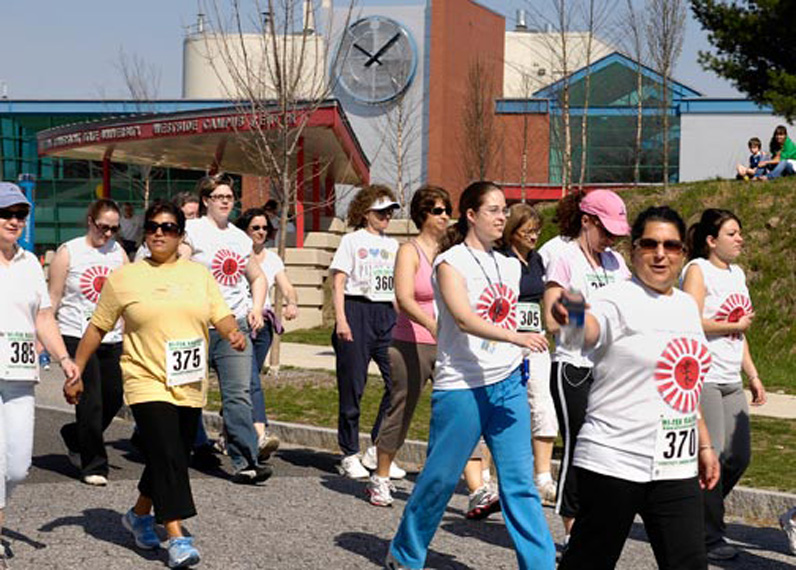
WCSU’s Health Promotion and Exercise Sciences Department offers 3 undergraduate Bachelor of Science programs – Public Health, Health and Wellness Management, and Health Education. All incorporate experiential learning and multidisciplinary curricula.

- HPX Mission
- Learning Outcomes
- Field Placements
- CEPH Accrediation
-
The B.S. in Public Health is accredited by CEPH (Council on Education for Public Health). You can learn more about CEPH by visiting https://ceph.org/
If you wish to request an electronic copy of the full accreditation report or the program self-study, please email Emily Stevens at stevense@wcsu.edu or Krista Heybruck at heybruckk@wcsu.edu.
Our mission is to link education and research with service learning, student teaching, and internship experiences. To achieve this mission, we incorporate strategies and approaches that enhance knowledge, build skills, improve group dynamics, increase volunteerism, and foster continuous quality improvement.
Our experiential approach is woven into eand practical experience to actively engage with the community.ach of the degree programs so we can provide students with opportunities
Learning Outcomes – B.S. Health Education (PK-12)
Graduates of the B.S. Health Education (PK-12) Certification Program will be prepared to demonstrate the following outcomes:
- Apply health content knowledge as competent health educators.
- Assess individual and community needs for health education.
- Plan effective health education programs.
- Implement health education programs.
- Evaluate effectiveness of health education programs.
- Coordinate provisions of health education services.
- Act as a resource person in health education.
Communicate health and health education needs, concerns, and resources (#2-8 responsibilities and competencies for school health educators have been established, as seen in The National Commission for Health Education Credentialing, Inc.
Learning Outcomes – B.S. Health and Wellness Management program
Graduates of the B.S. Health and Wellness Management program will be prepared to demonstrate the following outcomes:
- Articulate an understanding of the multidimensional nature of health and wellness, including contemporary topics within each dimension.
- Demonstrate the ability to design and implement wellness programs in community and industry settings.
- Possess a knowledge of the fundamental concepts of management as an organizational process.
- Display the communication skills, both written and oral, used in wellness, business, and organizational settings.
- Demonstrate cultural competence when working with diverse populations.
- Articulate a plan for achieving a career of their choice in the health and wellness industry.
Learning Outcomes – B.S. Public Health program
Graduates of the B.S. Public Health program will be prepared to demonstrate the following outcomes:
1. Use leadership, management, and collaborative skills as a member of a team to apply the health promotion program planning process to design, implement, and evaluate health promotion interventions. Specifically, students will demonstrate the ability to:
- Identify and assess health needs, resources and capacity for a health promotion intervention.
- Examine the relationship between behaviors and health issues using primary and secondary data.
- Plan a health promotion intervention incorporating health behavior theories and models.
- Design an evidence-based health promotion intervention including marketing and instructional materials.
- Integrate content knowledge into health promotion intervention program materials and lesson plans.
- Apply ethical principles and scientific inquiry processes to create an Institutional Review Board Protocol and conduct a pre-post assessment of a health promotion intervention.
- Market, implement, administer and manage a health promotion intervention.
- Develop and implement a comprehensive evaluation plan using sound research principles.
- Summarize the process and outcome evaluation results in a final report including all materials developed in health promotion program planning and evaluation process.
2. Serve as a health promotion professional in diverse communities and organizations using appropriate communication, promotion, and advocacy skills.
Community Health
Department of Health in Danbury, Norwalk, New Milford, Windsor, Waterbury, Bridgeport
Danbury Hospital Accountable Health Communities, Danbury
Nuvance Population Health
Connecticut Institute for Communities, Danbury
Planned Parenthood, New Haven
Abilities Beyond Disabilities, Bethel
Apex Community Care, Danbury
The Elm Project, Stamford
Danbury Farmers Market, Danbury
Green Chimneys, Brewster, NY
Newtown Youth and Family, Newtown
Danbury Hospital Employee Wellness
Visiting Angels, Brookfield
Maplewood Senior Living, Newtown
Fitness and Wellness
BlueStreak Sports Training, Stamford
Pure Physique, Danbury
RedZone Cross Fit, Newtown
HighLife by Tom, Ridgefield
University Athletics- WCSU, Yale, Quinnipiac, Post, Fairfield
Xceleration, Deer Park, NY
Golf Performance Center, Ridgefield
Camp Herrlich, Patterson, NY
EdAdvance, Waterbury
Waterbury Parks and Recreation, Waterbury
Regional YMCA, Waterbury
Middletown YMCA, Middletown, NY
Allied Health
Cardiac Rehabilitation Danbury Hospital, Danbury
RVNAhealth, Ridgefield
Motion Physical Therapy in Danbury, Brookfield, Southington, Norwalk, Mt Carmel NY
Main Street Rehabilitation, Danbury Hospital
Greenwood Physical Therapy, Bethel
Goal Physical Therapy, Westport
Ronai Physical Therapy and Sports Medicine, Orange
Carlson Physical Therapy, New Milford
Peak Physical Therapy, Waterbury
Chiropractic and Physical Therapy, Staten Island, NY
CORA Physical Therapy, Florida
Holistic Medicine
SOPHIA Natural Health Center, Brookfield
Integrative Wellness
Twin Star, New Milford
Integrative Wellness Journeys, Coventry, RI
Brainbody Wellness & Biofeedback, Scottsdale, AZ
The B.S. in Public Health is accredited by CEPH (Council on Education for Public Health). You can learn more about CEPH by visiting https://ceph.org/
If you wish to request an electronic copy of the full accreditation report or the program self-study, please email Emily Stevens at stevense@wcsu.edu or Krista Heybruck at heybruckk@wcsu.edu.